
The last week of my Mum’s life was both the hardest and the most profound experience I’ve ever lived through. It was a week where time slowed, where every breath mattered, and where the boundaries between being a daughter and being a nurse blurred into something deeply human. I had always known that the fundamental skills I learned during my training at St Bartholomew’s Hospital and beyond would shape my career, but I never imagined how much they would shape this final chapter with her.
Holding two roles at once
Caring for your own mother is unlike caring for any patient. There’s an intimacy to it, a weight, a tenderness that sits in your chest. Yet, in those final days, my experience became a quiet anchor. The assessments, the gentle repositioning, the symptom management, the calm explanations, they came not from clinical detachment but from love. Every action was a way of saying, “I’mhere, Mum, you’re safe”.
The privilege of a dignified death
We talk a lot in nursing about dignity but witnessing it at the end of life and being the one to protect it, is something sacred. It was a privilege to give my mum the kind of death she deserved: peaceful, respected, and surrounded by the people who loved her most. There was no rush, no harsh lighting, no clinical noise, just warmth, softness, and presence. I will carry that privilege with me for the rest of my life.
The community that supported us
The community nurses who visited brought not only expertise but gentleness, the kind that makes you exhale when you didn’t realise you were holding your breath. They treated Mum as if she were their own, and they treated me not as a nurse, but as a daughter doing her best in impossible circumstances.
And then there were the Marie Curie nurses, their compassion was soothing. They stepped into our home with quiet confidence, offering comfort, reassurance, and the kind of emotional steadiness that families cling to in those final days. Their presence allowed me to rest, to sit by Mum’s side simply as her child, not her clinician.
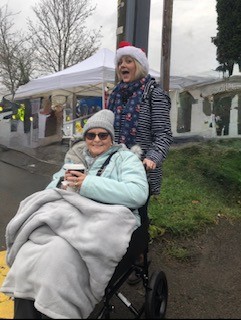
Even with years of nursing behind me, I wasn’t alone in this. My immediate and extended family were the steady ground beneath my feet throughout Mum’s final week. Each of them helped to carry the load, some through practical care, some simply by being there when the nights felt too long to bear and emotions ran deep. Their strength, their love and their willingness to show up in whatever way they could, created a circle of support for both Mum and me. In moments when I felt myself falter, they were the reminder that care is never a solitary act; it is something shared, something woven together by the people who love us most.
Love in the quiet moments
The week wasn’t defined by medical tasks. It was defined by the small, human moments: holding her hand, brushing her hair, whispering memories, playing her favourite music, watching her face soften when she recognised a voice. These were the moments that stitched the week together, moments that reminded me that end‑of‑life care is not about death, but about love.
Stepping into a new chapter
When Mum took her final breath, it wasn’t just her life that ended, it was the end of a chapter that had shaped me for decades. Twenty years have passed since I lost my dad, and now I find myself standing at the threshold of a life without the two people who gave me my roots, my strength, and so much of who I am.
Entering this new chapter feels both daunting and strangely quiet, there’s no parental voice coming from the other room, no familiar reassurance, no shared memories spoken back to me. I move forward with the quiet knowledge that everything they gave me: strength, kindness, humour, courage, is still here and it lives on in the way I care, the way I love and the way I choose to live.
What I take with me
Losing Mum has left an ache that will never fully fade, but it has also left a deep sense of gratitude. Gratitude for the years we had, for the skills that allowed me to care for her, and for the professionals who stood beside us with compassion and grace but most of all, gratitude for the privilege of walking her home with dignity.

 Rosalind Mabey